
Shield360 › For the CFO
The invoice proves
the spend exists.
It will not say whose it is.
A provider bill is a list of API keys and token counts. It knows a key spent $3,180 last month. It does not know the key belongs to a contractor who left in March, that two thirds of the usage was already covered by seats you pay for separately, or that a quarter of it came from a service nobody has owned since the team reorganized.
01 · The figures
Four numbers, one window
Four numbers, and the fourth
is the one nobody shows you.
Filterable to a person or a machine, over any window, exportable as CSV.
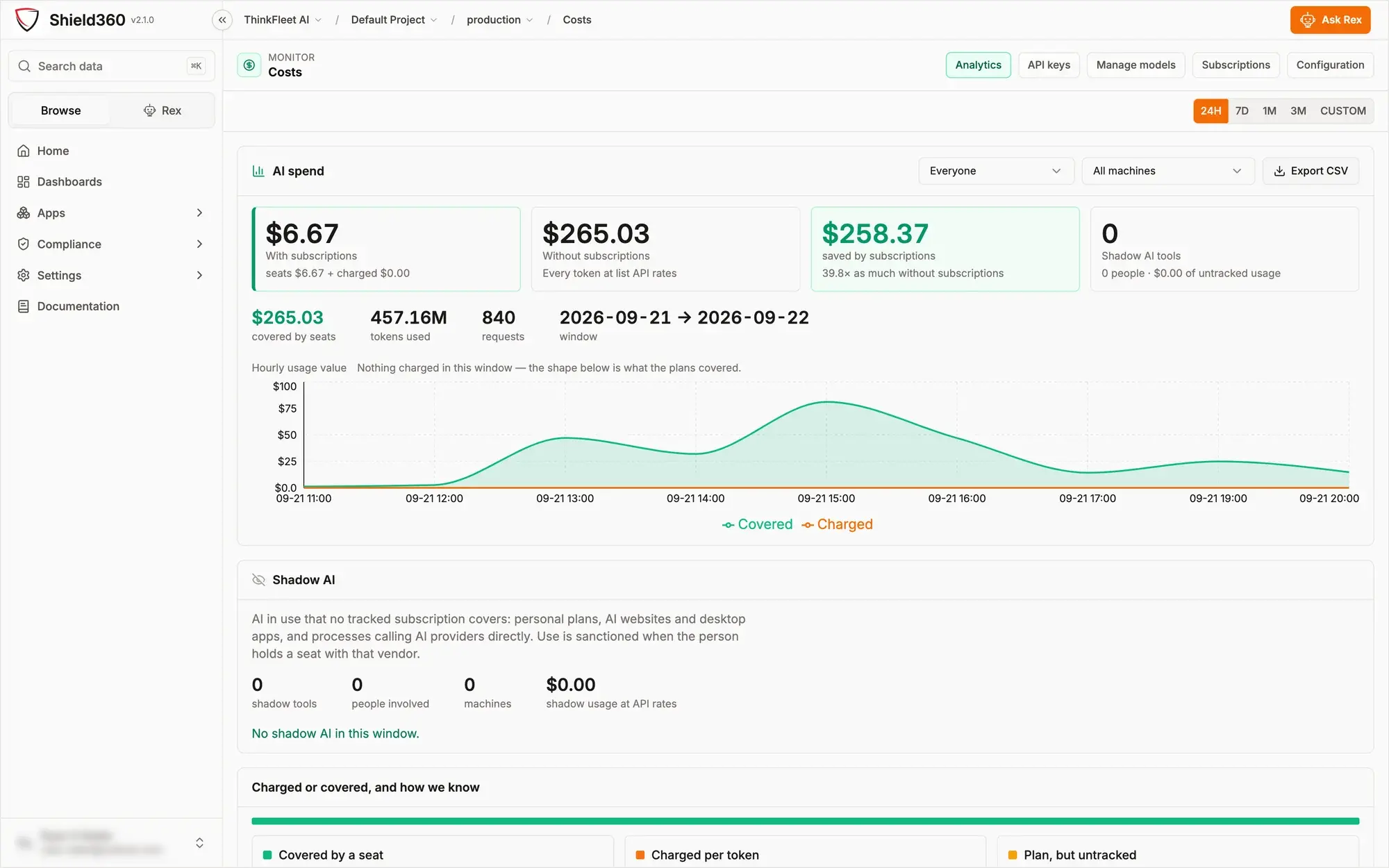
Table view
| Tool | You paid | At list rates | Multiple |
|---|---|---|---|
| Cursor · seats | $29,600 | $141,900 | 4.8× |
| Claude · team seats | $34,950 | $108,400 | 3.1× |
| GitHub Copilot · seats | $38,950 | $42,845 | 1.1× |
| OpenAI API · charged per token | $78,447 | $78,447 | 1.0× |
| Personal plans · untracked | no record | $41,288 | — |
| Figure | Reads | Why it matters |
|---|---|---|
| With subscriptions | What you paid | Seats, plus anything charged per token on top of them. The number that should reconcile to the general ledger. |
| Without subscriptions | The counterfactual | The identical usage repriced at list API rates. This is what the same work would have cost with no plans in place. |
| Saved by subscriptions | The difference | Stated as an amount and a multiple. It is the defense of a renewal — and, when the multiple is near one, the case for canceling it. |
| Shadow AI | The exposure | Tools, people, machines and the value of their usage at API rates, for AI no tracked subscription covers. |
02 · Attribution
From a key to a name
Cost with a name on it.
The same window, from whichever side the question came in: a person, a machine, a tool, a model, or a project. Ranked by spend, because the top of that list is where the conversation always starts.
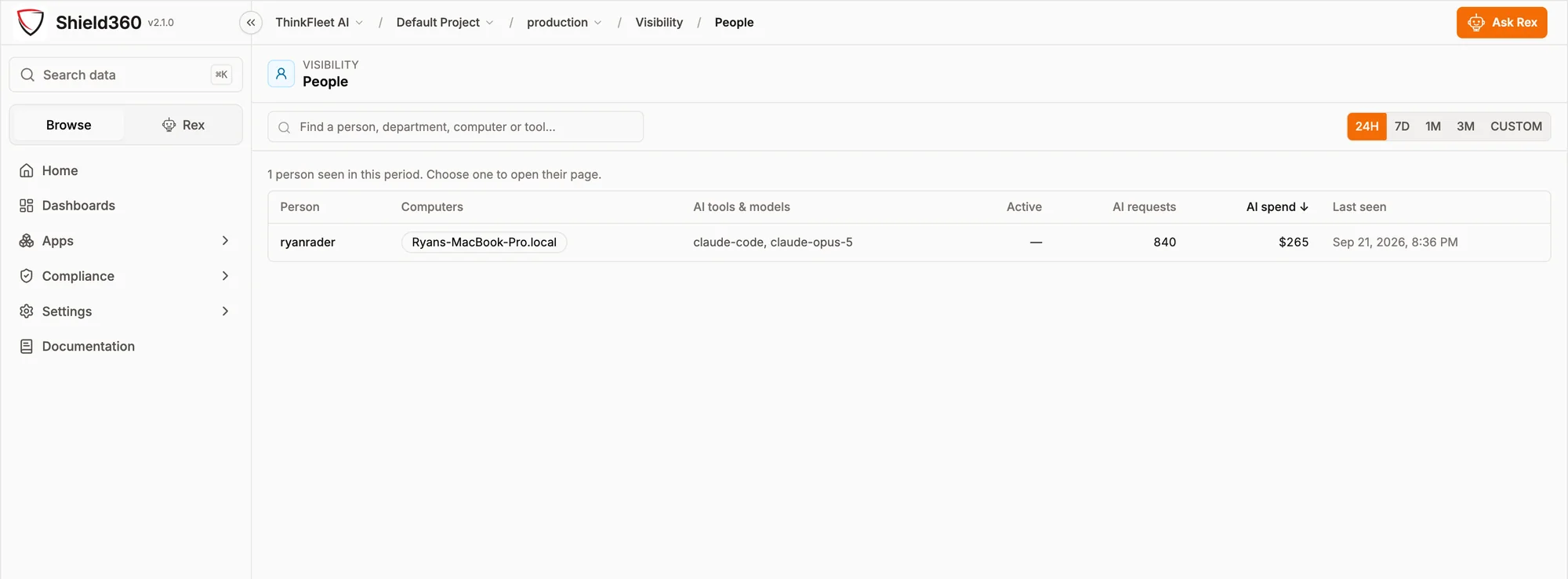
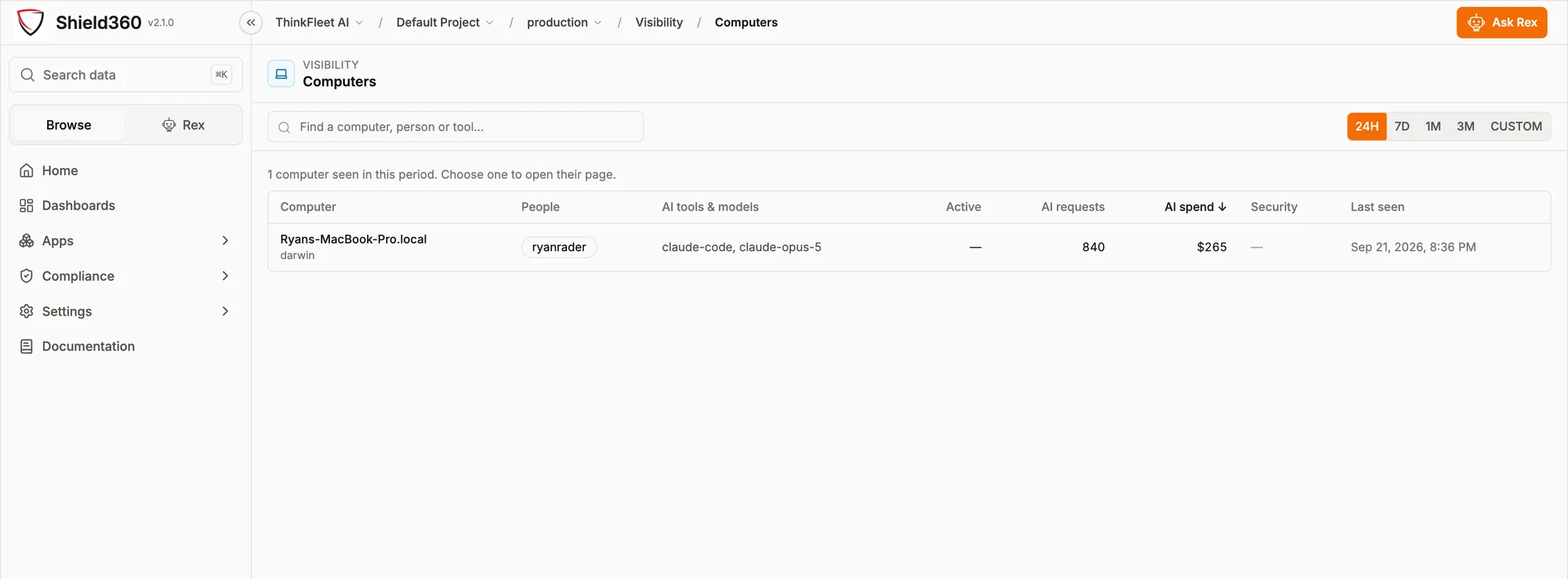
Table view
| Key | Owner | 30 days at list |
|---|---|---|
| sk-…c41e | J. Okafor · contractor, left 14 Mar | $11,940 |
| sk-…88a1 | billing-svc · production | $9,210 |
| sk-…2f0d | data-platform · production | $7,480 |
| sk-…e93b | no owner recorded | $4,120 |
| sk-…51c7 | M. Alvarez | $3,360 |
| sk-…7a2e | support-bot · staging | $1,905 |
| sk-…0b44 | R. Chen | $1,120 |
Keys, and who holds them
Spend per API key with an owner attached, so a key inherited from a departed contractor stops being an anonymous line item. This is usually the first place a real saving is found, and it is usually a key nobody knew was still live.
Seats against use
Subscriptions and seats are recorded and assigned to the people holding them. A seat paid for and not used is as much a finding as usage with no seat behind it, and both appear on the same screen.
Your own price book
Model prices are resolved from a price book you can correct, with family fallback for models it has not seen. A negotiated rate replaces the list rate, so the comparison reflects your contract rather than the vendor's public page.
Vendor bills, reconciled
Connect OpenAI, Anthropic, Copilot or Cursor and Shield360 compares what the vendor charged against what it measured. Where a provider exposes no usage API, that is reported as unanswerable — never as zero.
03 · Claims
What we will not tell you
What this page is not claiming.
Every AI cost vendor quotes a savings percentage. None of them can substantiate one, because the saving depends entirely on what you were doing before.
Find out what the invoice
has not been telling you.
The first month usually pays for the deployment, and it is almost always a key nobody knew was still live.